
Saturday, February 5, 2011

Kumho schedules price increases for March 1

Kumho Tire U.S.A. Inc. will raise prices on all passenger, light truck and medium truck tires effective March 1. Kumho says the details of this increase will be provided to its customers in the near future.

"The unprecedented increase in raw material costs over the past few months have made it absolutely essential for Kumho to implement this increase," says the company.

Kumho last raised its consumer and truck tire prices -- up to 6.5% -- on Nov. 1, 2010.

Kumho is the latest tire manufacturer to announce an upcoming price increase.

Consumer

* Goodyear Tire & Rubber  Co. will raise consumer tire prices on March 1. The increase, up to 6%, will apply to all brands in the United States and Canada.

* Falken Tire Corp. also will raise prices on March 1. The price hikes on Falken passenger and light truck tires will range from 5% to 8% depending on the size, with in-line adjustments as needed.

* Bridgestone Americas Tire Operations LLC will raise replacement and original equipment consumer tire prices one month later, on April 1, The increases on Bridgestone, Firestone and associate brand passenger and light truck tires in the U.S. and Canada will vary up to 8%.

* Cooper Tire & Rubber Co. (2.5%) and Michelin North America Inc. ("the increases will vary by product line") raised consumer tire prices on Feb. 1. Nexen Tire America Inc. (up to 8%) did the same on Jan. 1.

Commercial

* The Bridgestone Off Road Tire, U.S. & Canada Commercial Tire Sales division will increase prices on its mining, construction and industrial tires by 12%, "with some in-line adjustments." The increases are scheduled to begin March 1.

The Bridgestone Agricultural Tire, U.S. & Canada Commercial Tire Sales division announced a 4% price increase effective April 1 on the following tires: Firestone agricultural, construction and forestry tires; Bridgestone garden tires; and Regency tires sold in the United States and Canadian replacement markets.

* Michelin will increase prices on Michelin brand replacement agricultural tires sold in the U.S. and Canada on March 1. The hikes will be up to 8%.

The company already increased prices on its Michelin earthmover and industrial replacement tires sold in North America up to 7% on Feb. 1. It increased prices on Oliver and MegaMile retread rubber products sold in the U.S. up to 7% on Jan. 3.

* CGS Tyres Group (7.5% to 10% on farm and industrial tires), Titan Tire Corp. (up to 8% on farm and OTR tires), Yokohama Tire Corp. (up to 5% on bias and radial OTR tires) and Continental Tire the Americas LLC (up to 8% on truck tires) raised their commercial tire prices on Jan. 1.

(Source: http://www.moderntiredealer.com/News/Story/2011/02/Kumho-schedules-price-increases-for-March-1.aspx)

Rubber mart seen moving upward

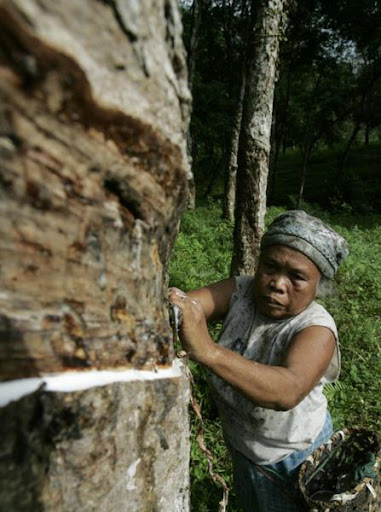
Malaysian rubber prices are expected to trend higher next week on higher demand amid tight supply globally.

A dealer said the current rainy season in rubber producing countries would lead to tight supply.
The local market was also expected to track the performance of regional markets, he added.
During the week just ended, the commodity traded lower as most players were reluctant to take heavy positions due to long festive holidays.

The Malaysian Rubber Board's official physical seller price for tyre-grade SMR 20 declined to three sen to 1,646.5 sen per kg from 1,649.5 per kg last week.
Latex-in-bulk slipped 1.5 sen to 1,023.0 sen per kg from 1,024.5 sen per kg previously.
The unofficial seller closing price for tyre-grade SMR 20 rose 1.5 sen to 1,648.0 sen per kg from 1,646.5 sen per kg last week while latex-in-bulk slipped one sen to 1,022.5 sen per kg from 1,023.5 sen per kg. – Bernama
(Source: http://www.btimes.com.my/articles/20110205180258/Article/)

Kerala to train rubber tappers from other states

KOTTAYAM (Commodity Online) : In order to address shortage of tappers, the Rubber Board in India has launched a new scheme to introduce labourers from other states on a large scale, to plantations in Kerala.
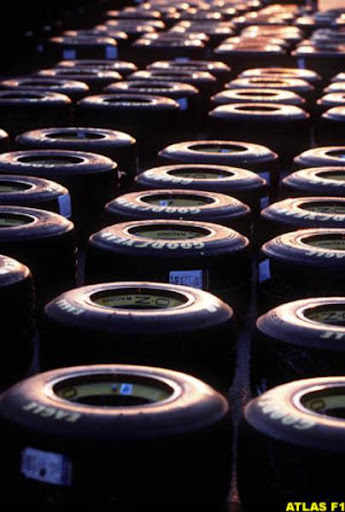
In this regard, the state level inauguration of the training programme for non-Keralite tappers was held at Pampady in Kotayam.
“Shortage of tappers is the most important problem facing the rubber plantation sector in Kerala”, said V.J. Kurian, Chairman, Rubber Board in a message.
Selected workers from Kerala and other states would be given intensive training in the Board’s Tapping Schools in Kerala. Workers from other states having valid Electoral Identity Card would be brought to Kerala, after obtaining necessary clearance from the police and medical authorities concerned.
After successfully completing the training, their service would be allotted to holdings which are already identified. The whole programme would be implemented with the involvement of Rubber Producers’ Societies (RPSs) and the Tapper Banks under their control, said the Chairman.
The tappers training programme was inaugurated by the former vice chairman of the Board, Adv. Siby J Monippally, General Secretary, Indian Rubber Growers’ Association. The tapper banks formed through this scheme was expected to foster good labour relations and would lead to inclusive growth in the sector, he said.
Under the new scheme, the Board will meet the entire expenses of the trainees for their journey from native place to Kerala and will also provide an allowance of `150 a day for each trainee, for food and incidental expenses.
The trainees in batches of 20 will be given 30 days intensive training. Each trainee will be given Rs.150 every day as stipend and their accommodation will be arranged in the Board’s Tapping Schools.
Training for the first batch, brought from Orissa State, will commence from 31 January 2011 at Tappers Training School at Kothala, Kottayam. A total of 280 workers will be trained in the Board’s seven tapping schools. Board proposes to make available the service of trained tappers to the RPSs by the commencement of the next tapping season.

(Source: http://www.commodityonline.com/news/Kerala-to-train-rubber-tappers-from-other-states-36089-3-1.html)

China 2010 syntetic rubber output hit 3.1 million tons

BEIJING (Commodity Online) : China’s output of synthetic rubber hit 3.1 million tons last year, up 11.7% year on year.
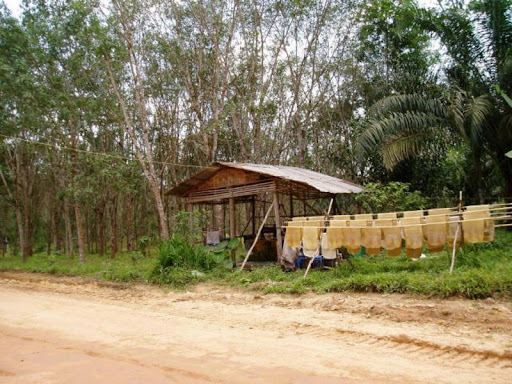
In 2010, China's foreign trade of synthetic rubber totalled 4.9 billion, surging 50.9% year on year, and the trade deficit surged 32.8% year on year to $3.71 billion.
The import value of synthetic rubber increased 42.6% year on year to $4.3 billion, while the export value skyrocketed 164.1% year on year to about $600 million.
The price of synthetic rubber remained at a high level, and the price of styrene-butadiene rubber, butadiene rubber, acrylonitrile-butadiene rubber, ethylene-propylene rubber and butyl rubber reflected an increase of 42%, 64.3%, 31.4%, 15.6% and 14.9% year on year, respectively. However, the chloroprene rubber's price slightly decreased 1.1% year on year.
A subsidiary of China Petroleum & Chemical Corp started operation on a 30,000-ton butyl rubber base and a 15,000-ton isoprene rubber base in April 20

(Source: http://www.commodityonline.com/news/China-2010-syntetic-rubber-output-hit-31-million-tons-36076-3-1.html)

Thailand kick-starts 12,8000 ha rubber plantation project

BANGKOK (Commodity Online) : A nationwide rubber plantation project that would cover 800,000 rai (12,8000 ha) in Thailand is in the offing with Thailand Premier Abhisit Vejjajiva encouraging farmers to take part in the drive.
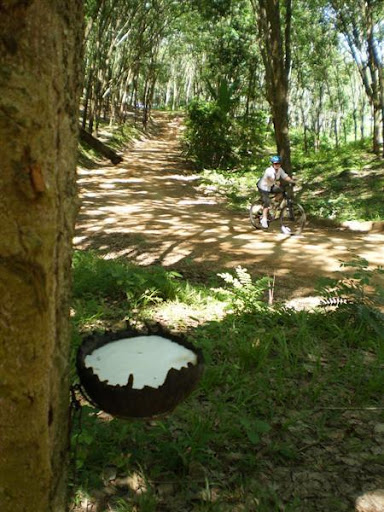
The planting mission makes economic sense as the government expects RSS3 grade rubber to move up to 200 baht ($6.45) a kilogramme, this year.
The project is expected to yield excess of 220,000 tons of natural rubber by 2017, a figure that would add to 3.11 million tons the country harvested last year. New planters (approx. 160,000 in numbers) would be initiated into the process and they would own between 2 rai (0.7 acres) and 15 rai (5.93 acres) of land.
The government kick-started the three year drive recently, that would enhance acreage of rubber plantations in the North of the country by 150,000 rai (24000 ha) and in the Northeast by 500,000 rai (80,000 hectares).
The rest of the acreage (150,000 rai or 24000 ha) would be spread across the East, central plains and the South of Thailand.
As per the project, government would provide low-priced rubber saplings, fertiliser and technical support for the first three years to planters.
By the time, planters are supposed to find provisions to bear the cost for the remaining crop cycle (year three and four) even as a state bank would provide them with low-interest loans to support the spending.
The government has also decided to extend the 8-billion-baht credit programme to farmers until March, 2012 as the allocation has been under utilized by farmers.
Prevailing high prices of rubber has ensured less instances of borrowing by farmers.

(Source: http://www.commodityonline.com/news/Thailand-kick-starts-128000-ha-rubber-plantation-project-36240-3-1.html)

Rise in spot rubber prices

On Friday (04 February 2011), the spot rubber prices rose due to fresh buying and short covering, tracking global gains but the weakness in domestic futures kept it under pressure during closing hours. Sheet rubber ended at Rs. 238 (235) per kg after hitting an intraday high of Rs. 240 in the morning session.
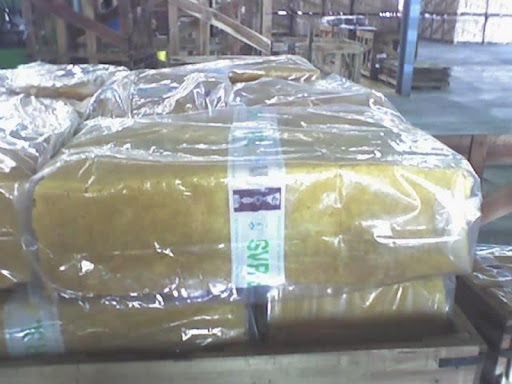
The February futures for RSS 4 declined to to Rs. 235.50 (239.48), March to Rs. 240.66 (245.06), April to Rs. 249.51 (254.17) and May to Rs. 254.20 (259.42) per kg on the National Multi Commodity Exchange.

Spot rates were (Rs/kg): RSS-4: 238 (235); RSS-5: 227 (225); ungraded: 223 (220); ISNR 20: 230 (227) and latex 60 per cent: 152 (151).

(Source: http://www.indiainfoline.com/Markets/News/Rise-in-spot-rubber-prices/3532997776)

Friday, February 4, 2011

Rubber Tops 500 Yen to Record as Recovery Boosts Demand Outlook

Rubber surged to more than 500 yen a kilogram for the first time as signs the global economy is improving boosted speculation demand will keep expanding for the commodity as weather disruptions constrain supplies. The cash price in Thailand also surged to a record.

The July-delivery contract climbed as much as 2.9 percent to a record 504 yen a kilogram ($6,178 a metric ton) on the Tokyo Commodity Exchange before settling at 502.9 yen. The most-active contract surged 7.2 percent this week, the largest advance in 13 weeks.

Asian stocks climbed for a fourth day before a report that economists said will show U.S. employers added the most jobs in January in three months. Asian companies including Samsung Electronics Co. and Hyundai Motor Co. boosted earnings last quarter as economic growth in the U.S. and China spurred consumers to buy more electronics and cars.

“Optimism about global economic growth spurred investors to buy industrial commodities,”Kazuhiko Saito, an analyst at Tokyo-based broker Fujitomi Co., said today by phone. “Rubber also advanced on speculation that Chinese buyers may step up purchases after the New Year holiday.”

The Institute for Supply Management’s index of U.S. non- manufacturing businesses released yesterday showed service industries expanded in January at the fastest pace since August 2005, indicating the economic recovery is broadening.

U.S. nonfarm payrolls climbed by 146,000 in January after climbing by 103,000 the previous month, according to a Bloomberg survey before today’s Labor Department report. The jobless rate rose to 9.5 percent from 9.4 percent, a separate survey showed.

Recovery Signs

“The U.S. economy is picking up and starting to show some pretty consistent signs of recovery, which could spill over to jobs,” said Greg Gibbs, a currency strategist at Royal Bank of Scotland Group Plc in Sydney.

Rubber futures have gained 21 percent this year, extending last year’s 50 percent rally. Supplies from Thailand, Indonesia and Malaysia, the top growers representing 70 percent of global supply, were curbed by rain while rising car sales led by China and India improved demand.

“Concerns over worsening supply shortage still boost the sentiment as demand remains robust, while supply may demand further as rubber trees are entering leave-shedding season, lowering output,” Sureerat Kunthongjun, an analyst at AGROW Enterprise Ltd., said by phone from Bangkok.

La Nina, which started in June and usually lasts for nine months or more, has led to higher-than-average rainfall in most parts of Southeast Asia. The weather event is having a “major impact” on rubber and palm oil production in Malaysia, as heavier rainfall may hamper harvesting and tapping, according to the Malaysian Meteorological Department.

The physical price of natural rubber in Thailand advanced to a record 184.05 baht ($5.96) a kilogram today as investors are concerned over the supply situation in Thailand and Malaysiaahead of the annual low-production period, the Rubber Research Institute of Thailand said. Robust car sales in the U.S. supported prices, it said.

U.S. Car Sales

U.S. sales of cars and light trucks rose 17.3 percent from a year earlier to 817,098 in January, according to data provided by Ward’s Information Products.

The Shanghai market will be closed until Feb. 8 for Lunar New Year holidays. May-delivery rubber in Shanghai climbed to a record 41,850 yuan ($6,350) a ton on Jan. 31.

Natural-rubber consumption in China may rise 9 percent to 3.6 million tons this year and India’s consumption may gain 5.2 percent to 991,000 tons, according to the Association of Natural Rubber Producing Countries.

China’s natural-rubber  inventories rose for the first week in four, adding 126 tons to 58,673 tons, based on a survey of 10 warehouses in Shanghai, Shandong, Yunnan, Hainan and Tianjin, theShanghai Futures Exchange said Feb. 1. That was a 61 percent drop from last year’s peak of 151,832 tons.

Car-sales growth in China will be around 10 to 15 percent this year, the China Association of Automobile Manufacturers said Jan. 10. Total auto sales, which include cars, trucks and buses, jumped 32 percent last year to 18.06 million, the association said.

(Source: http://www.bloomberg.com/news/2011-02-04/rubber-futures-top-500-yen-a-kilo-for-first-time-extend-rally-to-record.html)